I didn’t write this book because I had it all figured out. I wrote it because I spent seventeen years building a career that couldn’t exist without me — and then I spent the past twenty-four months tearing it all apart and rebuilding it as something that could.
If you’re reading this, there’s a good chance your story sounds like mine. You’re good at what you do. Maybe great. You’ve built a reputation in your industry — the person people call when standard approaches have failed, when the situation is too complex for the junior team, when the stakes are high enough that someone with real experience needs to walk through the door. You’ve earned that reputation. It costs you your weekends, red-eye flights, stays in hotel rooms that all look the same, and a growing suspicion that the ceiling above you every night isn’t made of glass. It’s made of hours and is slowly moving inward.
There are only so many of them in a day, right?
I’m an aerospace quality management consultant, and my specialty is supplier recovery — walking into aerospace manufacturers who had failed their AS9100D audits and were staring down decertification, then spending ninety days rebuilding their quality management systems from the ground up. I enjoyed it. My clients told me I was great at it. And every single time I left, the system I built started dying — almost instantly.
I didn’t see that pattern for a long time. When a client regressed, I blamed them. They didn’t follow the procedures. They didn’t assign a process owner. They let the quality manager I trained leave without a succession plan in place. It was all logical and correct for the most part. But it wasn’t the real problem; the real problem was structural — and unfortunately, that structure was me.
This book is the story of what happened when I finally stopped blaming the client and started questioning the model.
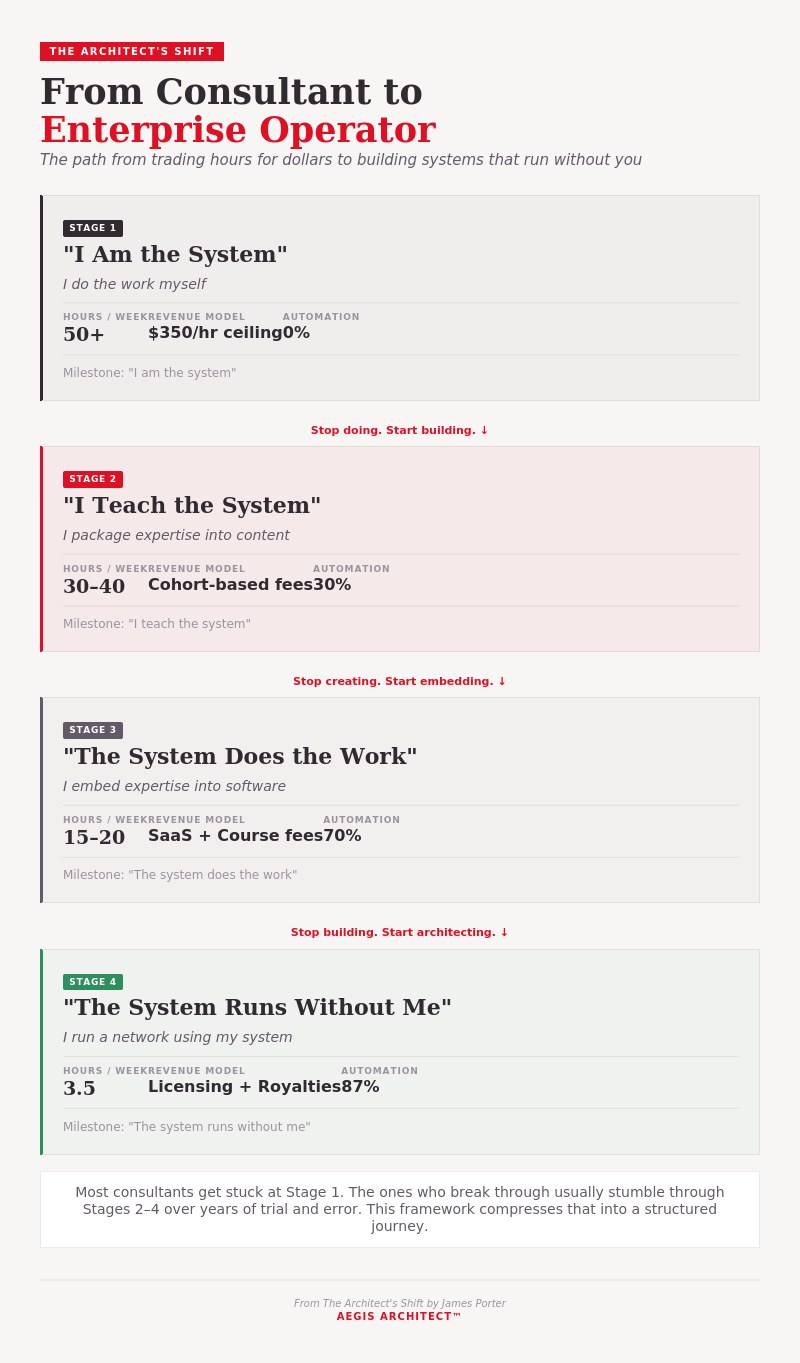
The existing model was simple: I traded expertise and hours for currency. I charged by the hour, served six to eight clients per year, worked fifty-plus hours a week, and hit a revenue ceiling that hadn’t meaningfully changed in nearly a decade. Every solution I tried — working harder, working longer, raising my rate — was a variation of the same strategy: extracting more value from the only resource I had — my time.
I couldn’t invoice a twenty-fifth hour.
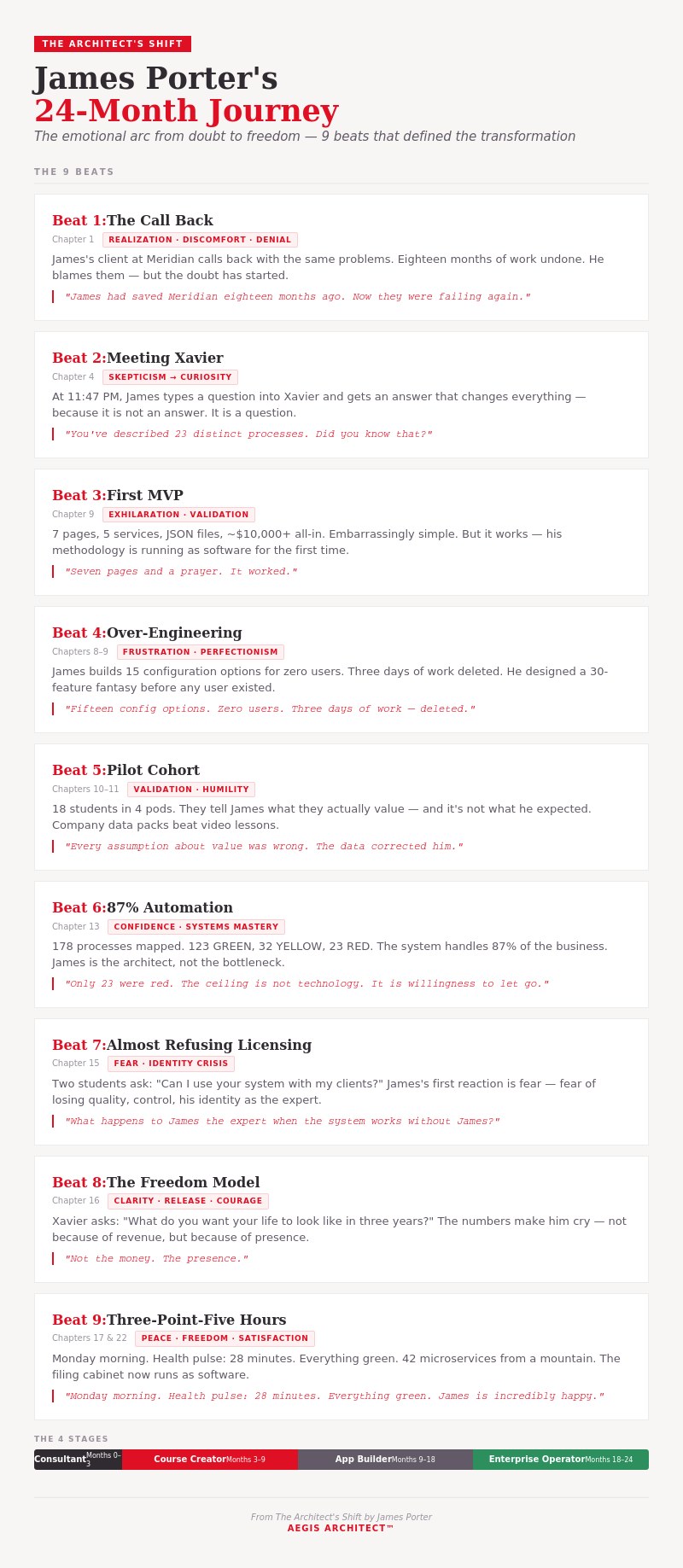
The transformation didn’t start with a grand vision. It began with a phone call from a former client whose quality system collapsed eighteen months after I left. It continued with a filing cabinet full of nearly two decades’ worth of checklists and templates that were brilliant and organized, but useless to anyone who wasn’t me. Spoiler alert — it all accelerated when I built an AI digital twin named Xavier that began asking me the questions I had been avoiding my entire career:
“What would your business look like if it didn’t need you?”
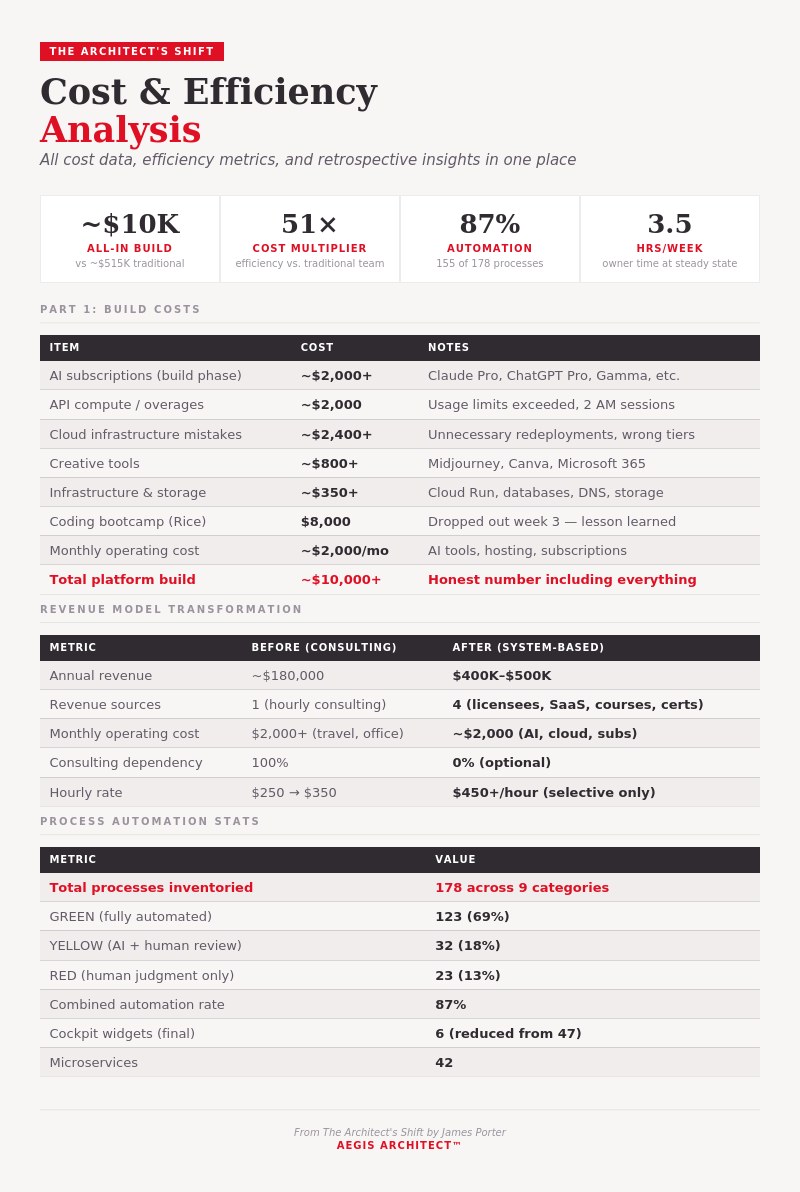
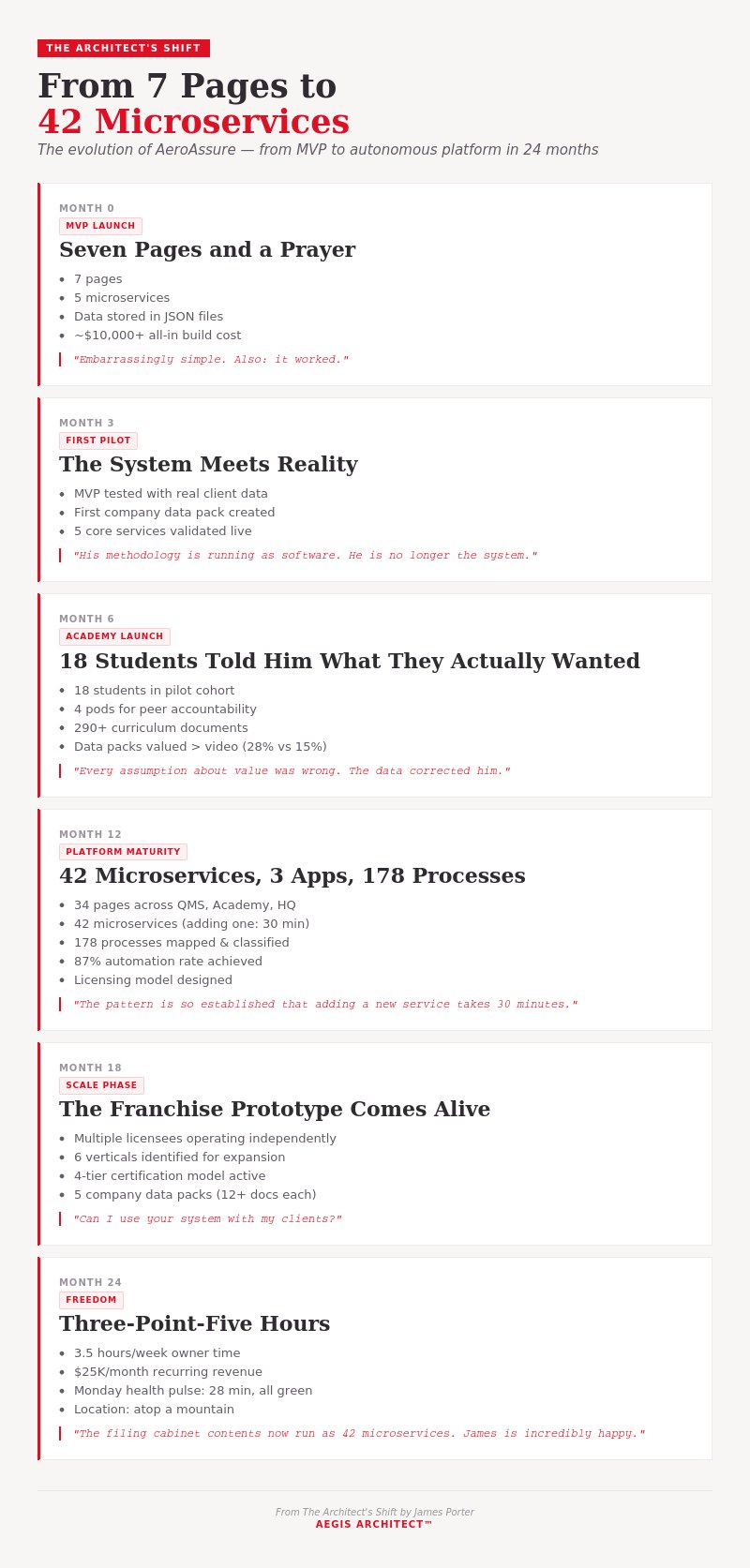
Over twenty-four months, I went from a solo consultant billing $250 an hour to the architect of a product ecosystem that automates eighty-seven percent of the processes I used to do by hand, is built to train and certify other consultants through a four-tier academy — with the founding cohort launching Q4 2026 — and is designed to run on about three and a half hours of my time per week once steady state is reached. That is the target I am working toward. That’s the goal all other decisions revolve around.
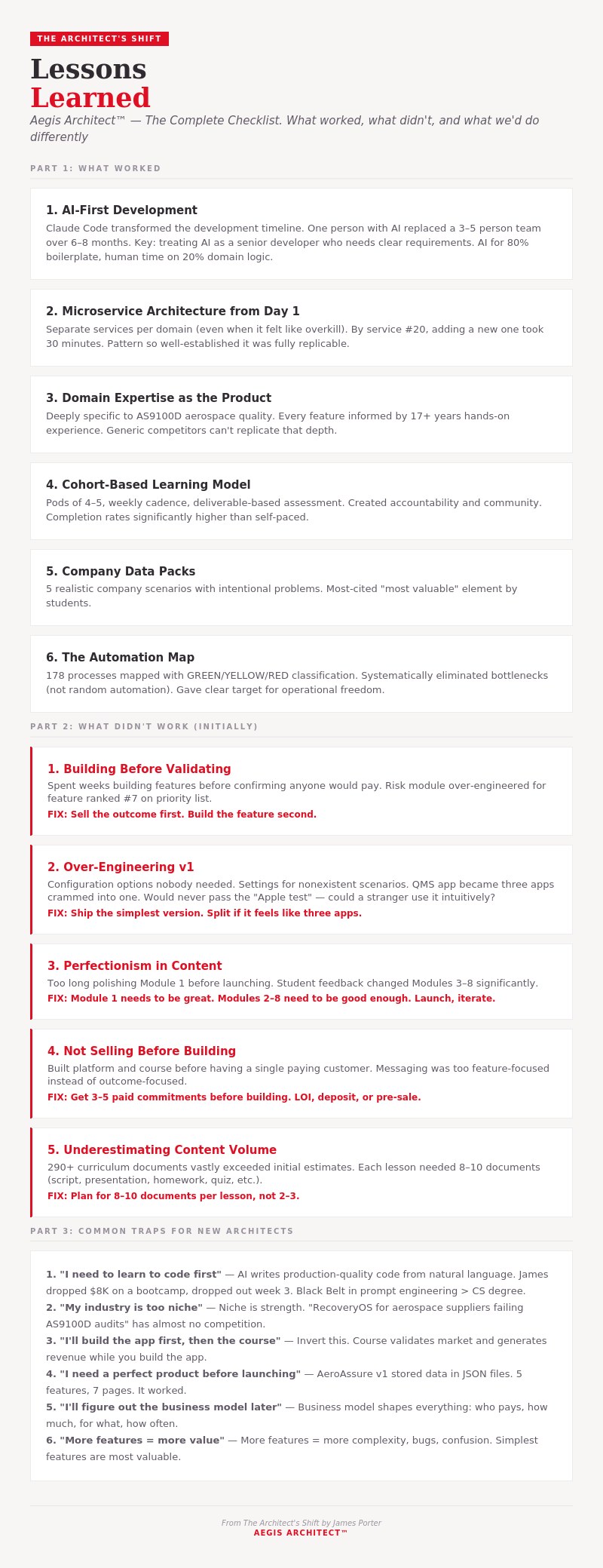
I did it all without a technical co-founder. Without venture capital. Without a computer science degree. I did it with domain expertise, a few AI coding agents, and roughly $10,000 in total build costs. Most of which was spent figuring out how to build the app, fixing bugs, and troubleshooting — I’ll give you all those costly tips and the exact frameworks later. Stick around.
This book is structured after Michael Gerber’s The E-Myth Revisited — a book that argues most small businesses fail because they’re started by technicians who are brilliant at the work but have no idea how to build a business that does that work without them. When I read that description, I felt personally attacked.
In the best possible way.
The book follows my real journey in four parts:
Part I: The Technician’s Trap tells the story of realizing the problem. The callback. The filing cabinet. The rate ceiling. Meeting Xavier. The moment I stopped selling hours and started thinking in systems.
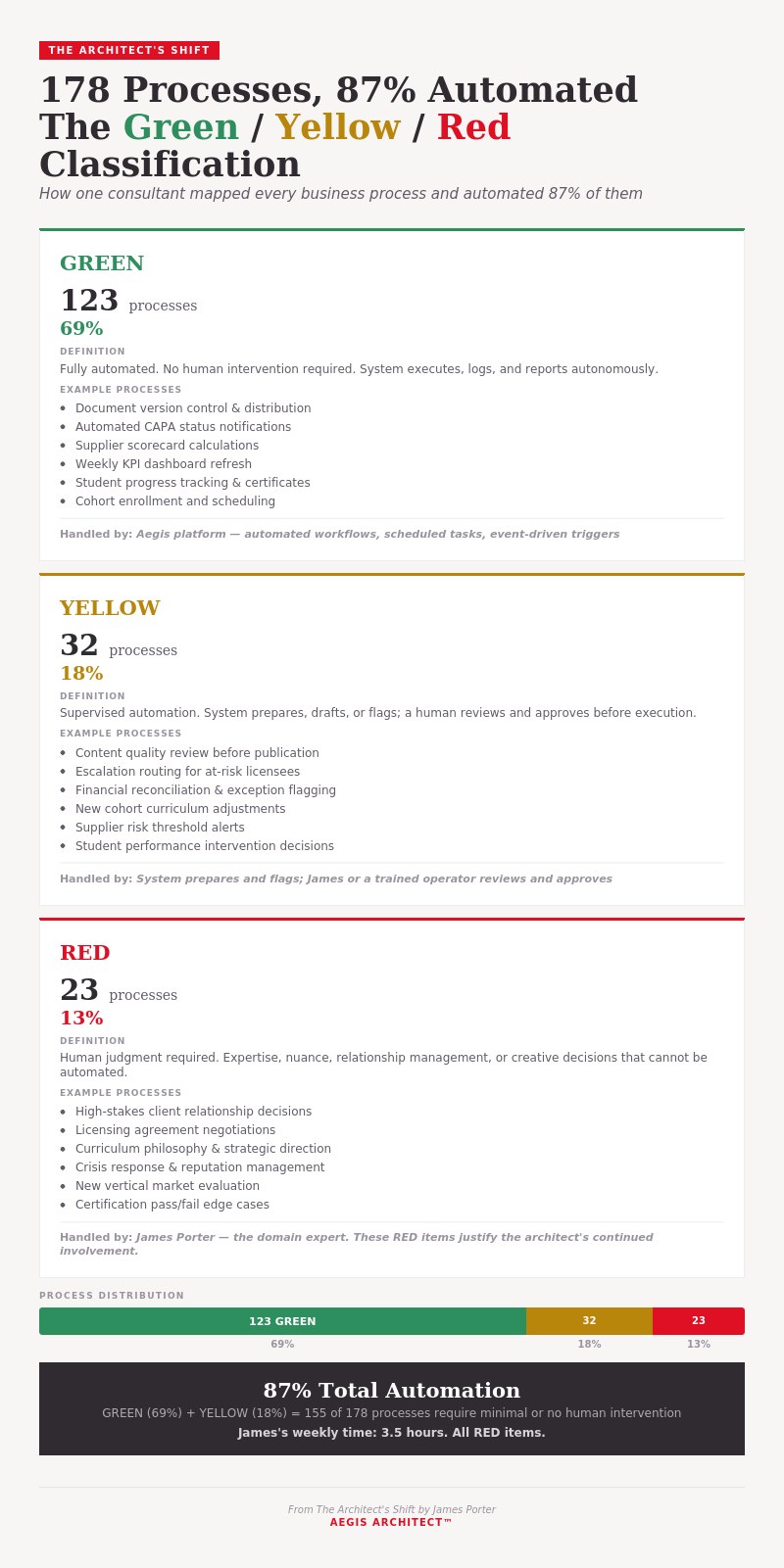
Part II: The Architect’s Blueprint covers the building phase — identifying my ideal client, mapping the pain, inventorying all 178 processes I perform, building the first MVP, creating the course content, and designing the deliverables that students valued more than the lectures.
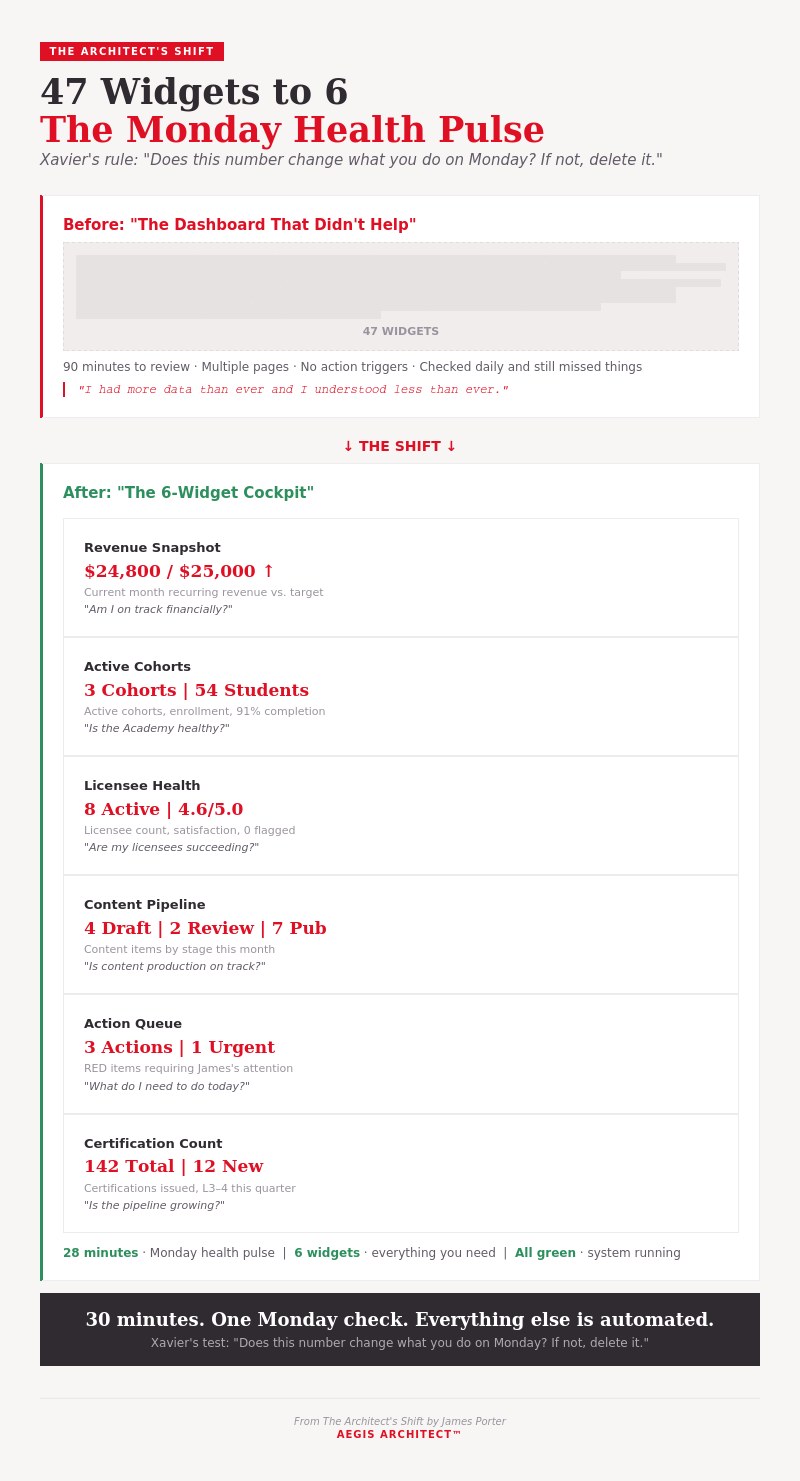
Part III: The System Runs the Business follows the hardest part — letting go. Automating my email. Classifying every process as GREEN (fully automated), YELLOW (human-in-the-loop), or RED (judgment required). Building the HQ cockpit and doing the math on freedom versus the payday.
Part IV: The Architect’s Manual shows you how to break through the ceiling. I stop telling the story and start teaching the method. Extraction protocols — automation playbooks. Content frameworks. The freedom dashboard. Everything you need to do to get to where I am — adapted for your domain, your expertise, your version of the filing cabinet.
Every chapter in Parts I through III follows a pattern: I make a mistake born from a natural but often incorrect assumption. Xavier asks the questions that reframe the problems. I do the work, and you’ll see yourself in the mistakes; that’s the point.
A few things this book is not.
It is not a book about artificial intelligence. Xavier — my AI digital twin — plays a central role, and I built my apps using AI coding agents. Technology is a tool, not the story. The story is about a domain expert who realized his expertise was worth more than his calendar allowed and developed a system.
It is not a motivational book. I’m not going to tell you to believe in yourself, crush it, or unlock your potential. I’m going to tell you what I did, what went wrong, and what I’d do differently. You’ll decide what applies to your situation. Either do the work or don’t.
It is not a book written by someone who has all the answers. I still love putting on steel-toed boots and walking through manufacturing facilities, and I need to stay sharp. The Technician in me didn’t die; it got reassigned.
What this book is: one consultant’s honest account of building a system that is helping free him from the trap of his own expertise. It’s messy. And it hurts a lot more than I expected. There have been plenty of times I wanted to quit, and no one would have ever known. But I want to be free. And fortunately for you and me, freedom has never been more attainable, given the right system.
Let’s get started.
— James “The Architect” Porter